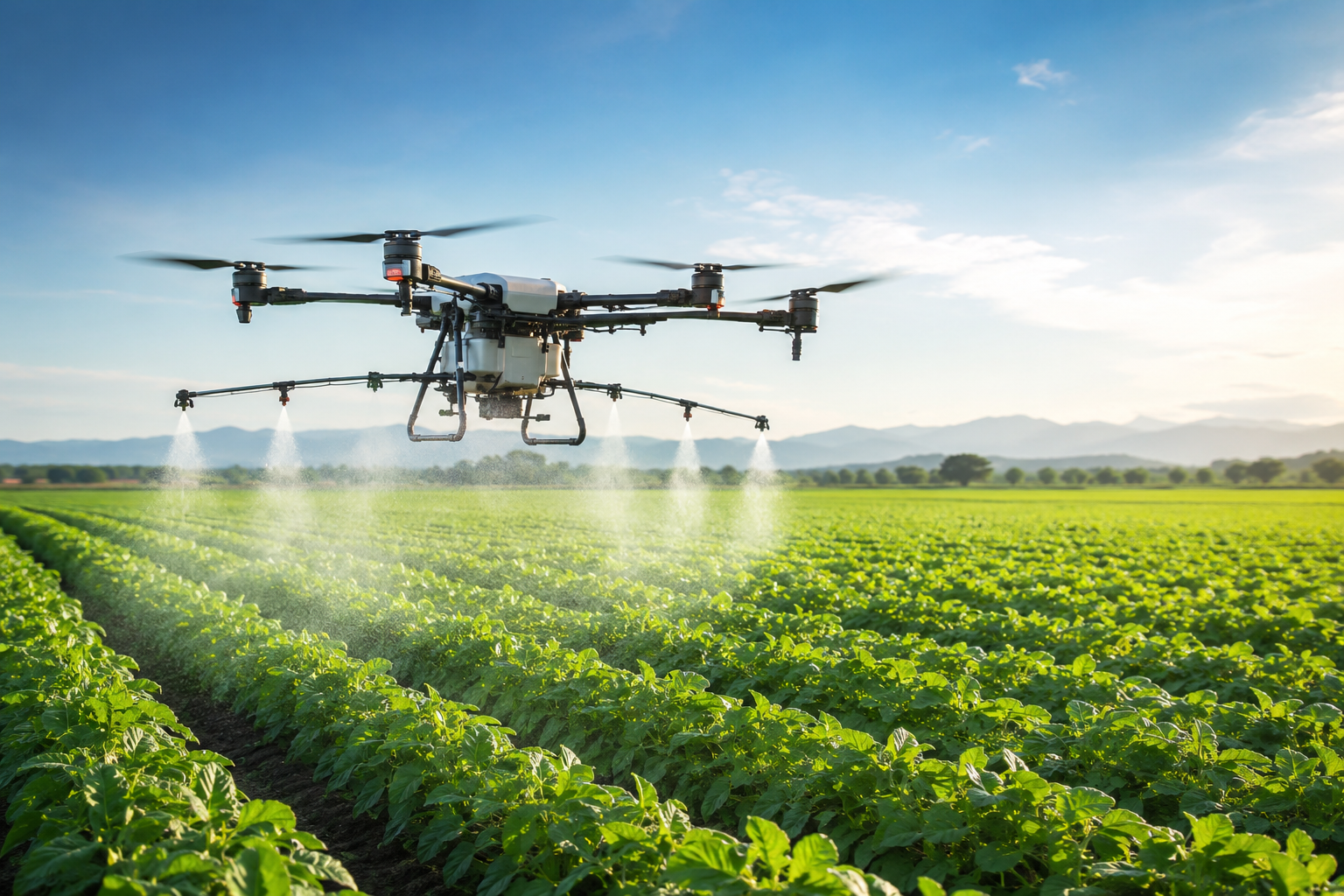
As agriculture continues to move toward modernization and intelligent operations, plant protection drones are becoming an increasingly important tool in agricultural production. Compared with traditional manual spraying and ground-based machinery, agricultural drones offer higher efficiency, stronger adaptability, lower labor requirements, and more precise spraying. They are changing the way farmers manage crops, prevent pests and diseases, and improve overall productivity.
1. Improving Operational Efficiency
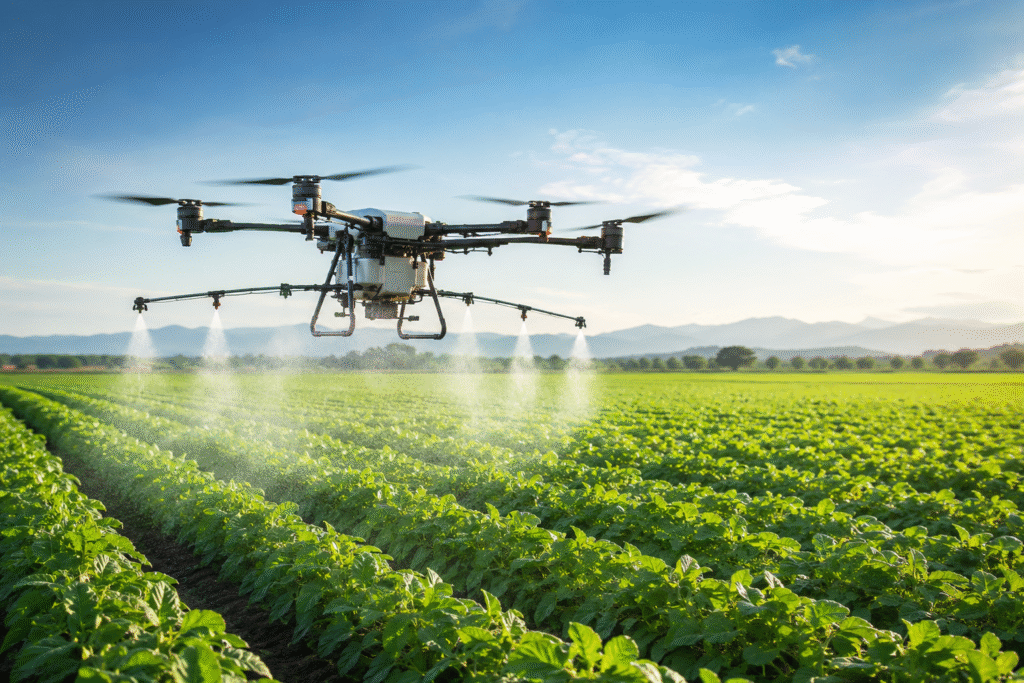
Traditional crop protection work often relies on manual backpack sprayers or large ground machines. These methods can be time-consuming, labor-intensive, and limited by field conditions. Plant protection drones can complete large-area spraying tasks in a much shorter time, making them especially suitable for crops such as rice, wheat, corn, vegetables, orchards, and tea plantations.
With preset flight routes and intelligent control systems, drones can fly automatically and spray evenly across farmland. For large farms and agricultural service providers, drones help complete spraying work during the best treatment window, reducing the risk of crop loss caused by delayed pest or disease control.
2. Reducing Labor Intensity
Modern agriculture faces challenges such as rising labor costs and a decreasing rural workforce. Traditional pesticide spraying requires workers to walk through fields for long periods while carrying spraying equipment, which is physically demanding and may expose them to chemicals.
Plant protection drones allow operators to stay away from the spraying area and control the operation remotely. This greatly reduces labor intensity and improves work safety. In difficult environments such as muddy fields, paddy fields, hilly terrain, mountain farms, and orchards, drones provide a more flexible and efficient solution.
3. Enabling More Precise Spraying
Plant protection drones can work with GPS positioning, route planning, flow control systems, and altitude sensors to achieve precise spraying. By setting flight height, speed, spray volume, and operation routes, drones can help distribute liquid more evenly across the crop surface.
More precise spraying improves the effectiveness of pest and disease control while reducing pesticide waste. It also helps lower the impact on soil, water sources, and the surrounding environment. This makes drone spraying an important part of green agriculture and sustainable farming.
4. Lowering Agricultural Production Costs
Although agricultural drones require an initial investment, they can help reduce overall production costs in the long term. Drones work faster, require fewer workers, and use pesticides more efficiently. This can reduce labor costs, chemical waste, and repeated field operations.
For cooperatives, farms, agricultural service companies, and large-scale growers, plant protection drones can also create new business opportunities through professional spraying services. This increases equipment utilization and supports the development of modern agricultural service models.
5. Adapting to Complex Agricultural Scenarios
Plant protection drones are not limited by ground road conditions. They can easily operate over paddy fields, hills, orchards, tea gardens, and other complex terrains. Unlike large ground machines, drones do not crush crops or damage the soil structure.
In wet fields, sloped orchards, tea plantations, and areas with tall crops, drones can complete spraying and crop protection tasks more flexibly. Their strong adaptability makes them a practical and valuable tool for modern agriculture.
6. Promoting Smart Agriculture
Plant protection drones are not only spraying tools; they are also becoming an important part of smart agriculture systems. When combined with remote sensing, field data management, pest and disease monitoring, and variable-rate spraying technology, drones can help agriculture move from experience-based management to data-driven management.
In the future, agricultural drones will be used not only for spraying pesticides, but also for crop monitoring, disaster assessment, seeding, fertilization, field inspection, and other farming tasks. This will make agricultural production more intelligent, accurate, and efficient.
7. Supporting Green and Sustainable Agriculture
Modern agriculture is not only focused on yield, but also on environmental protection and resource efficiency. Plant protection drones help control spraying range and chemical dosage more accurately, reducing excessive pesticide use and lowering the risk of environmental pollution.
At the same time, drone operations reduce the need for heavy ground machinery, helping to avoid crop damage and soil compaction. As drone technology continues to develop, plant protection drones will play a greater role in green, low-carbon, and sustainable agriculture.
Conclusion
Plant protection drones are bringing a more efficient, safer, and more precise approach to modern farming. They improve field management efficiency, reduce labor intensity, lower operating costs, and support the development of intelligent and sustainable agriculture.
With continuous improvements in drone technology, smart control systems, and agricultural data platforms, plant protection drones will become an essential tool in the future of farming and a key driver of smart agriculture.