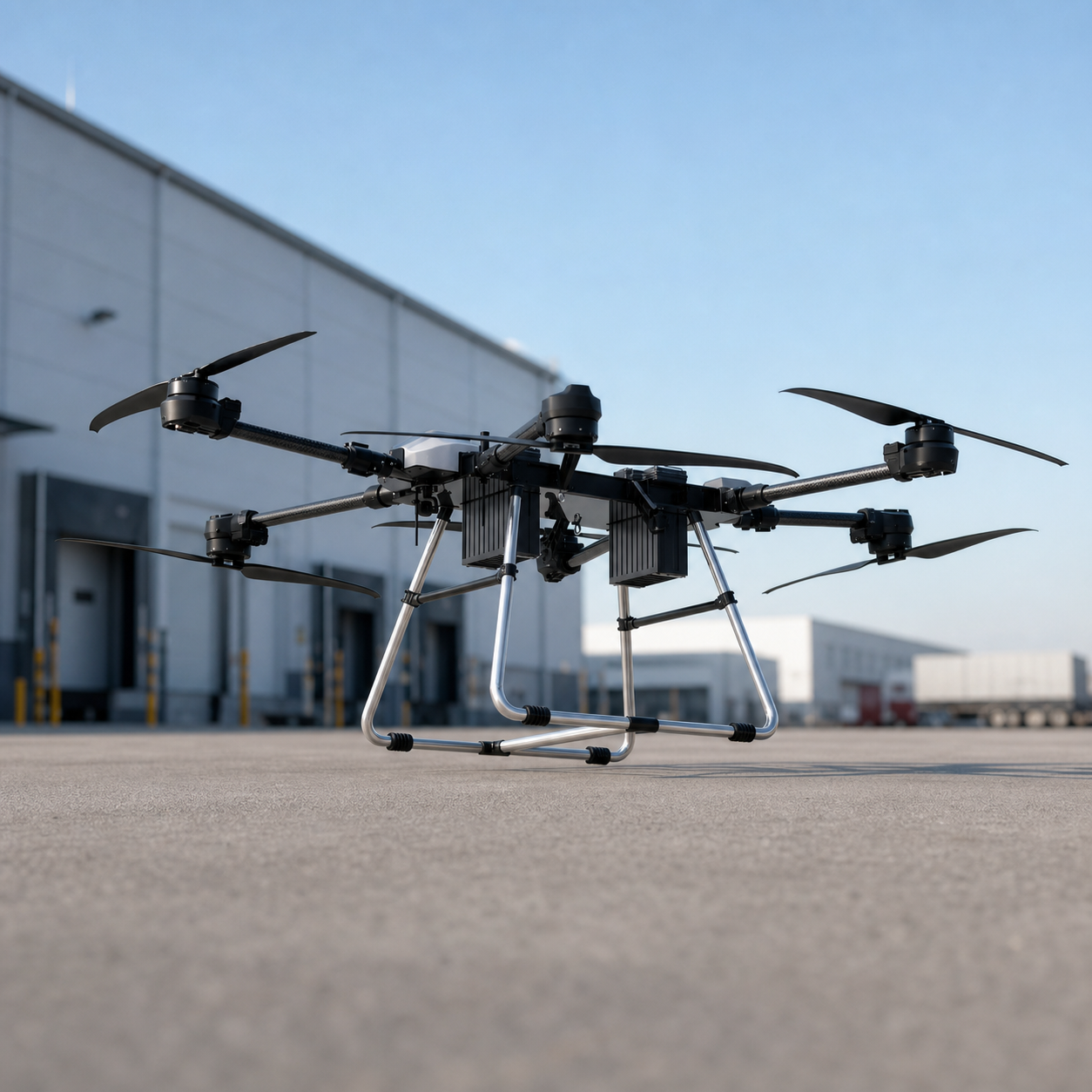
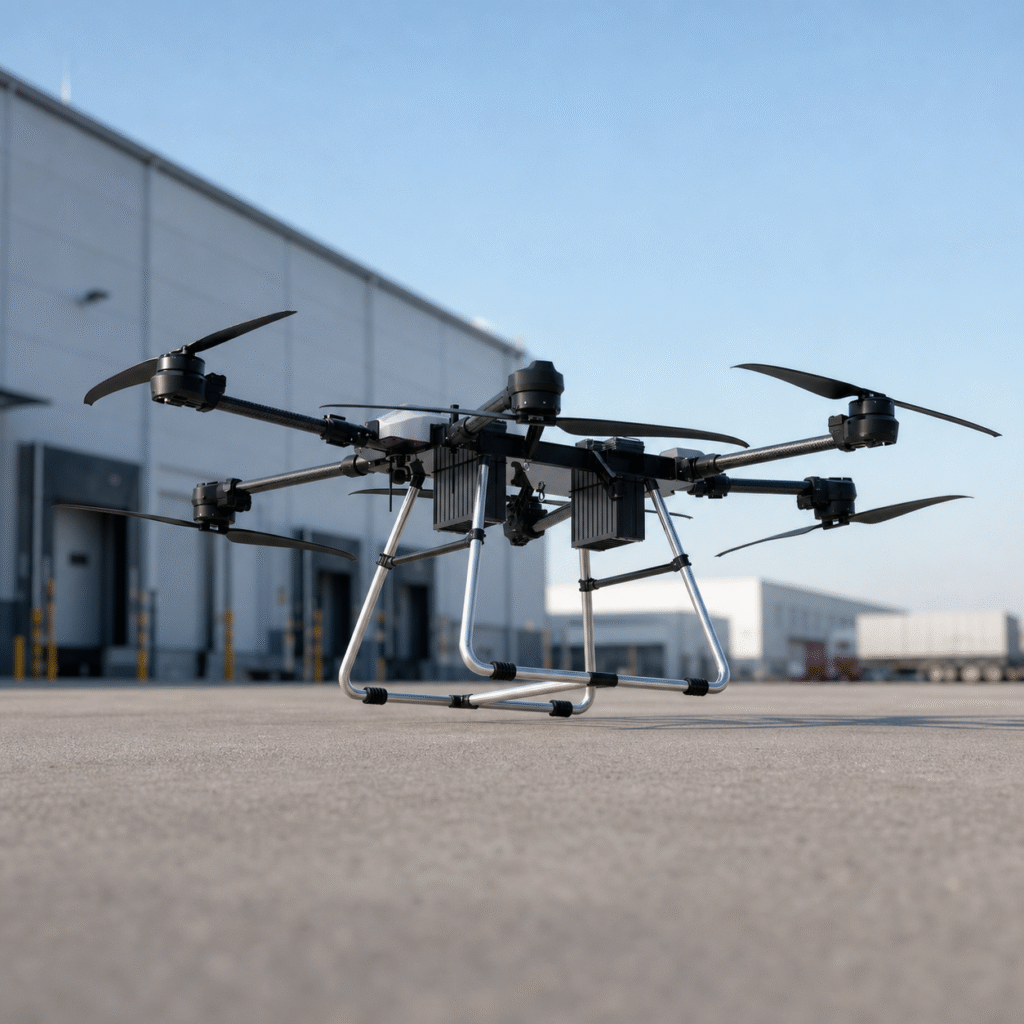
Transport drone operations should not require a complicated control process. This Transport Drone combines autonomous flight tools, route management, battery monitoring, and live imaging in one practical system.
Operators can use an Android phone as the ground station or manage flights through a PC. Voice reporting provides flight status updates without requiring the operator to watch the screen continuously.
The system supports route planning, autonomous flight, and point A to point B operations. Once a route has been prepared, the drone can complete the assigned flight with limited manual input. One touch takeoff and landing also reduce the number of steps required during daily operation.
Battery monitoring helps operators manage flights more safely. When the battery becomes low, the system can record the interruption point and return the drone. The operator can then use the saved position when preparing to continue the task.
Geofencing, route locking, no-fly zones, and flight log storage give operators more control over where and how the aircraft flies. Motor sequence and direction detection can also help identify setup errors before a mission begins.
An onboard camera captures images during flight and transmits them in real time. Operators can check the route, view the surrounding area, and follow the progress of a transport task from the ground station.
This Transport Drone is designed for teams that need repeatable cargo flights with straightforward controls and practical safety functions.
What makes the draft still sound AI-generated?
- The opening is slightly generic and could describe many industrial drones.
- The structure follows the feature list too closely.
- Several paragraphs have nearly identical sentence rhythms.
- The conclusion sounds like standard product copy rather than a useful purchasing takeaway.
Final rewrite
Transport Drone: practical control for autonomous cargo flights
A transport drone may spend most of its time in the air, but many operational problems begin on the ground. Complicated controls, poorly managed routes, and missed battery warnings can turn a routine cargo flight into unnecessary work. This Transport Drone is designed to make those daily operations easier to manage.
Choose the ground station that suits the job
Operators can control the drone from an Android phone or a PC ground station. The mobile option is convenient for field use, while the PC interface is better suited to operations that need a larger working screen. Voice reporting provides audible flight updates, so the operator does not have to keep watching the display for every change in status.
Plan the route and let the aircraft fly
The flight control system supports route planning, fully autonomous missions, and direct operations from point A to point B. After the route is set, the drone can carry out the flight without continuous manual control.
One touch takeoff and landing make the process simpler at both ends of the mission. These automated procedures reduce the amount of manual input required during two of the most sensitive parts of a flight.
Manage low battery situations without losing the route
Built-in battery detection monitors the aircraft during operation. If the battery runs low, the system can record the point where the mission was interrupted and return the drone.
Saving that position matters on longer or repeated routes. Instead of rebuilding the mission from memory, the operator has a clear reference for where the task stopped.
Keep every flight within its assigned area
The system includes geofencing, route locking, no-fly zone settings, and flight log storage. Operators can define permitted flight areas, keep the aircraft on its assigned route, and review stored records after the mission.
Motor sequence and direction detection provide another useful check. These functions help the operator confirm that the propulsion system is configured correctly before flight.
See the operation as it happens
The onboard camera can capture images while the drone is working and transmit them to the ground station in real time. This gives the operator a direct view of the flight environment and makes it easier to follow mission progress from the ground.
For organizations planning regular cargo flights, the value of a transport drone depends on more than the aircraft itself. Route control, clear status information, automatic flight procedures, and reliable safety settings all affect how easily the system fits into daily work. This Transport Drone brings those functions together in a platform built for repeatable, controlled transport operations.